


In our previous discussion we spoke about ratiō and how Cicero understood rationality as something that the human mind had access to but did not have influence over. Rationality was sourced from nature and the guiding life essence, and it enabled the human mind to reason. But what do we mean when we talk about the ‘human mind’? The way in which Cicero and the Romans understood the mind is very different to our own modern understanding. One of the Latin words used to refer to the human mind is animus. Accordingly, our discussion today will be focussed on the animus and a Roman psychological model of the human mind.
I am going to use ‘inward state’ to refer to the animus. This is because the animus was the entire psychological part of the human being. The human being had two levels of life experience. On the one hand, you had the body with an outward experience. On the other, you had the animus with an inward experience. While most people settle with translating the animus as either ‘mind’, ‘heart’, or ‘spirit’, these words do not embrace the full meaning. The animus is multifaceted but each of these words only refer to a single function. We talk about thinking with the mind, feeling with the heart, and bringing an energy with our spirit. We might say things like: “this thought just came to my mind”, and “I just cannot shake this feeling from my heart”, and “that man has such a playful spirit”. These words cannot really be used interchangeably. It would sound strange if we were to say, “I felt love in my mind” or “I thought it in my heart”. In contrast, the Latin animus does all these things. Therefore, I think ‘inward state’ is more beneficial for the purpose of bringing as much of the Latin meaning into English. It brings forth a unified inward experience; an inward state that has thoughts, feelings, and energy.
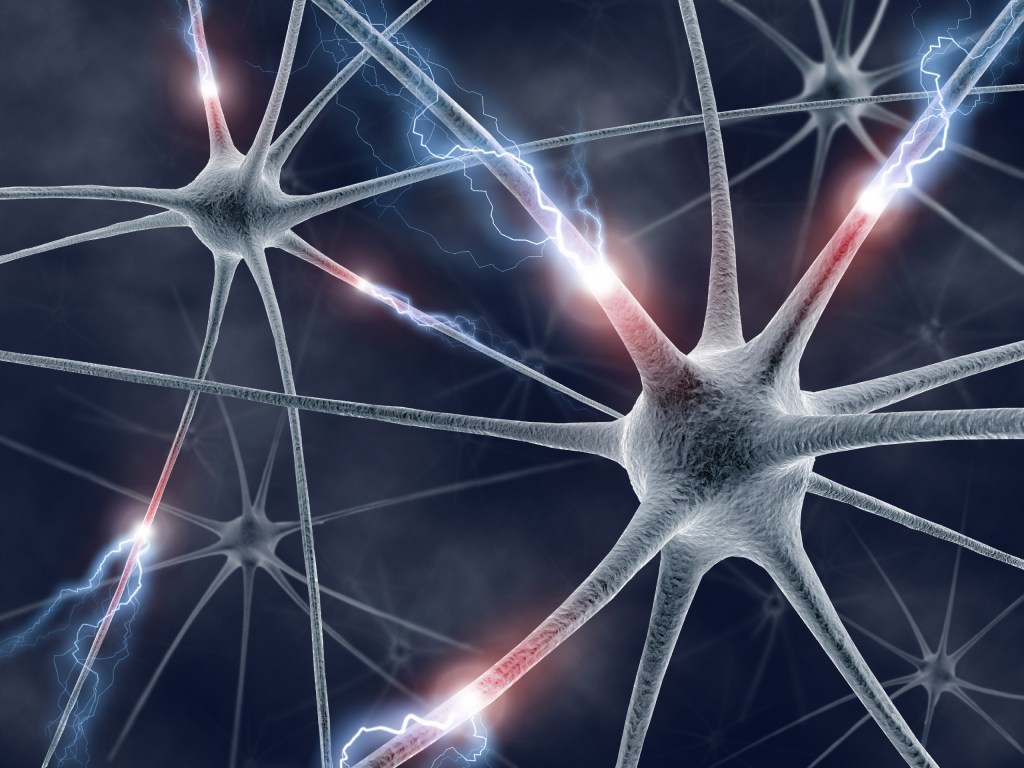
We must still be cautious when using inward state to refer to the animus because our modern understanding is different to the Latin one. Already, we have seen how the English language reflects a splitting of the inward state. We differentiate between the parts that think, feel, and bring energy. This reflects a modern technical understanding of the human mind. Thanks to modern technology, we can know that thoughts are caused by electrical signals being sent between neurons in our brains and that emotions are caused by the release of chemicals. This has affected the way we talk about the inward state. Minds think thoughts, and hearts feel emotions. We can differentiate between the two. The Latin animus does not reflect this technical understanding of split inward state. Instead, the understanding of the inward state is experiential. The animus reflects an inward state which is unified in the way we experience it. Naturally, in the experience of our own inward states, thoughts, feeling and moods all overlap and merge into one another creating complex connections. Feelings are generated by thoughts, and thoughts are generated by feelings. This makes it very difficult to know exactly where each one comes from. If, of course, it is possible to know at all. Nevertheless, they all originate from an inward state. In this way, the animus embraces the functions of the mind, heart, and spirit.
The animus is fundamental to our understanding of how Cicero understood the human experience. It combines what we would refer to as mind, heart, and spirit into one concept. It is the entire inward experience which is multifaceted, an active experiencing state with thoughts, feelings, and energy. Although terms like mind, heart, and spirit are more natural in English and accurately refer to functions of the animus, they do not embrace the full meaning of the animus as a unified inward state. We must also remember that, in the context of our discussions on Cicero’s philosophy, the inward state must be understood experientially and differentiated from a technical scientific understanding. All of this I hope to be contained in the usage of the term ‘inward state’. In closing, I want to reiterate that the inward state and rationality will both be key terms for our journey on the Via Ciceronis, and both will be used next week in our discussion of the perturbationes (emotions).

 Via Ciceronis
3 responses to “3. Animus: The Inward State and Ancient Psychology”
[…] week we discussed the emotions (perturbationes), defining them as movements of the inward state (animus) away from rationality (ratio). Through the lens of the Stoic school of philosophy, we learnt that […]
LikeLike
[…] previous discussions that an emotion (perturbatio) is defined as a movement of the inward state (animus) away from rationality (ratio). There were four different categories of emotion based on the false […]
LikeLike
[…] However, this is a not the case. The emotions (perturbationes) are agitations of the inward state (animus) away from natural rationality (ratio). Generosity is also natural and in line with rationality. […]
LikeLike