

Last week we discussed the emotions (perturbationes), defining them as movements of the inward state (animus) away from rationality (ratio). Through the lens of the Stoic school of philosophy, we learnt that the emotions were not only bad, but within our control as well. Today, we will deepen our understanding of the emotions by discussing the theory around the word morbus. The word morbus on its own can simply be translated as sickness. When the Stoics talk about morbus animi (sickness of the inward state), we can quickly understand this as mental sickness. However, the Romans did not have a psychological science like we have today. Therefore, it was not so obvious that the mind could become sick. Sicknesses (morbi) were something that effected the body and could be identified by symptoms like a fever or a rash. Nevertheless, in our discussion of the animus, we discovered that the body could be used as a mirror to understand the inward state. The body had an external experience, in the same way as the inward state had an internal experience. Therefore, the Stoics find it useful to use the analogy of the body to explain the workings of the inward state. In this way, morbus animi is drawing on a medical vocabulary to draw a picture of something abstract and unseen.
The analogy of the body and the inward state is ingrained in our speech today. The field of psychiatry has proven that mental sicknesses do exist and are a huge problem. Unfortunately, our modern world is full of mental sickness. Everyone has some acquaintance with depression or anxiety. If one has not experienced it directly, they at least know someone that has. These conditions would be considered sicknesses of the inward state in Stoic terminology. However, if we limit ourselves to a psychiatric definition, we miss much of what the word is referring to. The Stoic sicknesses of the inward state also include milder conditions which we might dismiss as negative character traits. In this way, the Stoic term morbus animi is much broader than our modern psychiatric ‘mental illness’.
The Stoics believed that the sicknesses of the inward state were responses to sustained emotions. Cicero states:
“Let it be understood that an emotion (perturbatio) is always in turbulent motion and inconsistently shifting one’s beliefs. However, when this boiling and excitement of the inward state (animus) becomes habitual, as if settling into the veins and marrow, then sickness (morbus) and infirmity come into existence.” (Tusc. 4.24)
In other words, when someone holds onto a false belief for an extended period, he begins to experience emotion habitually. When this settles and becomes a habit, it is considered a sickness of the inward state. In this way, it is false belief which sustains mental sickness. A few examples will help demonstrate the basics of the Stoic position. They will also show how broadly this theory can be applied. If someone grows up with strict perfectionist parents and is led to believe that nothing he does is good enough, then that person will start to believe that their actions are going to be bad and should be avoided. Therefore, they begin to experience distress when acting and fear when needing to act in the future. When these emotions become habitual, they settle in the inward state as a form of anxiety. Sometimes this can lead to panic which paralyses and irrationally stops one from acting altogether. No one makes a rational decision to have a panic attack. At this stage, the inward state has already become irrational and will shift beliefs to avoid acting at all costs. This is an extreme manifestation of the sickness.
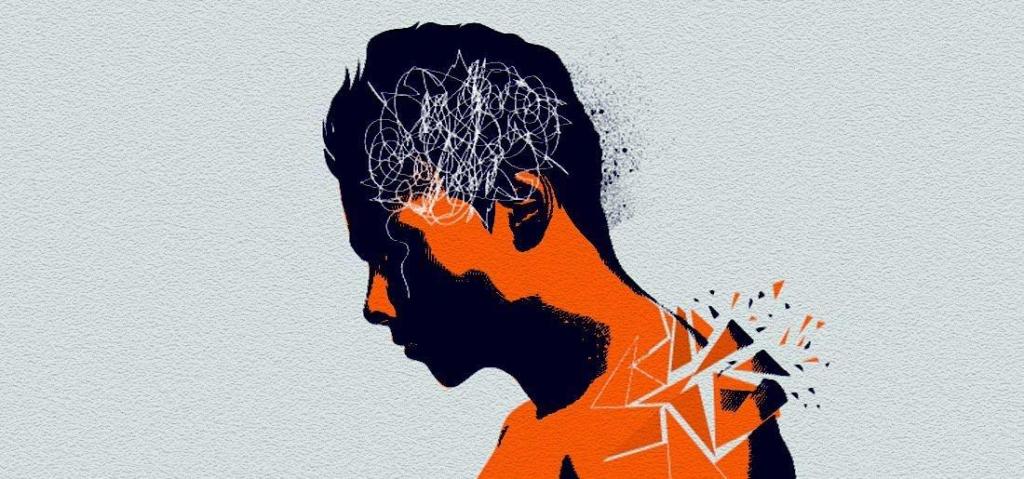
This process works in the same way for what we refer to as negative character traits. For example, if someone holds onto a belief that money is good and should be pursued at all costs, then he will experience gladness when money is present and desire money for the future. This state of emotion turns into a sickness called greed (avaritia). On the other hand, if someone believes that money is bad (maybe because he thinks that becoming rich will corrupt his inward state and make him sick), then he will experience distress when money is present and fear money coming in the future. This fear of money and being rich may turn into the sickness of envy when one starts to hate those who are rich. Money is neither good nor bad. It has no moral value. Indeed, if someone pursues money in line with rationality, then he will not experience desire nor become sick with greed. Likewise, if someone avoids money in line with rationality, then he will not experience fear nor become sick with envy. In this way, sicknesses of the inward state come from false beliefs about the value of things, whether good or bad. These beliefs can be directed at anything. In this way, the sicknesses of the inward state can be used to explain a vast range of negative character traits, from the extreme to the mild. Some we still consider sicknesses today, others we dismiss as negative character traits. All were considered sicknesses of the inward state by the Stoics. Therefore, the emotions are not only bad because they are a turning away from rationality. They are bad because they can damage the health of the inward state (sanitas animi) and make the person sick.
Since the emotions damage one’s mental health, they are bad for everyone. Beforehand, we would have been able to argue that one only needed to eliminate the emotions if one wanted to become wise and be a Stoic sage. However, since they lead to sickness, they should be eliminated by everyone. The medicine that the Stoic philosophers offer is a simple one. They suggest that the best cure is the immediate application of rationality because it stops the emotion before it advances into sickness. This is a cure that is appropriate for the theoretical Stoics who enjoy philosophy. But what about everyone else? Must everyone become a Stoic philosopher if they want to become mentally sane? The Stoics do not concern themselves with answering this question and are happy with their solution. However, as we have discussed, Cicero was not a Stoic, nor did he believe that one needed to be a Stoic to have a healthy inward state. Next week we shall find out why.
 Via Ciceronis