


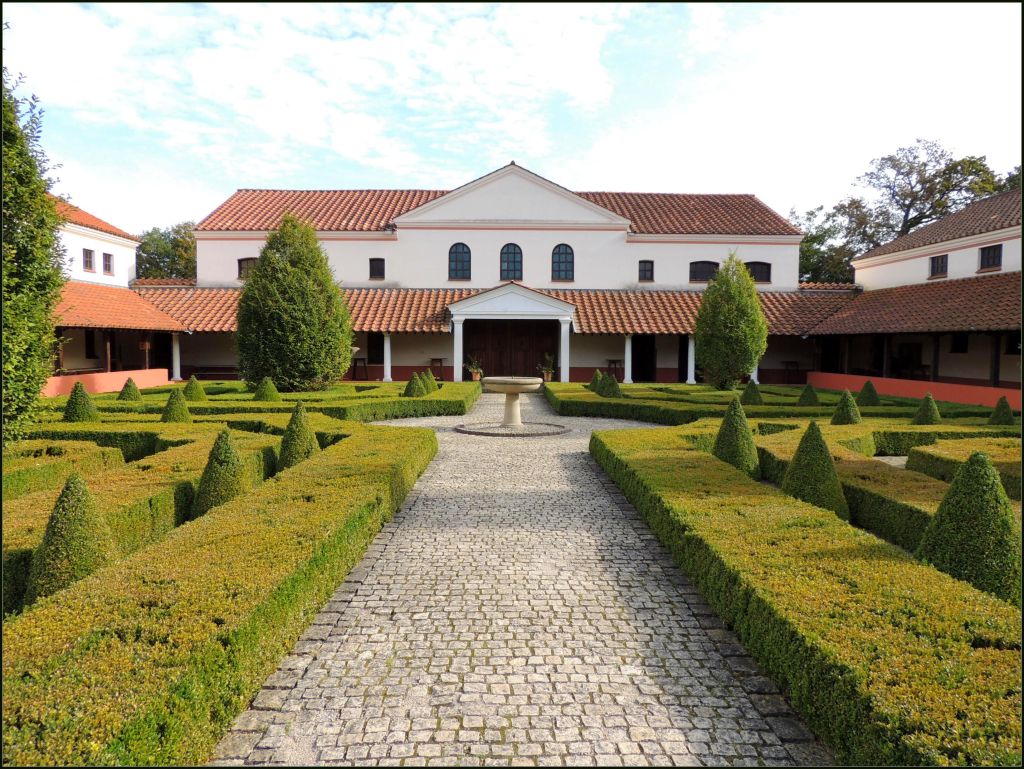
In late March 45 BCE, Cicero was at his villa near Tusculum writing philosophy. This villa was his favourite place in the world, and he had gone there to console himself after the death of his much beloved daughter Tullia. At the time, Rome was also going through a massive change. The civil war between Caesar and Pompey was over and Pompey was dead. Caesar was left unchallenged and had taken on the title Dictator. The following is an entirely fictional conversation between Cicero and his best friend Atticus at the villa near Tusculum. In reality, Atticus was not at Tusculum during this time and this conversation never happened. Nevertheless, I hope that it will demonstrate the relevance of Cicero’s philosophy by giving us a more human look at the author and the epoque in which it was written.
Atticus: “Oh my dear Cicero, I’ve been hearing rumours from Rome that do not paint a very pleasant picture of you. People are starting to ask why you haven’t returned to Rome in weeks. They believe that your grief has made you weak, if not mad. You know I don’t believe them but I’m struggling to find any other reason why you would need to stay here in Tusculum for so long.”
Cicero: “I find it amazing how rumours manage to cling onto one morsel of truth, while twisting the rest beyond all recognition. It’s true that my grief brought me to Tusculum, but it is not what keeps me here. The reason I am still here is because I am writing philosophy”
Atticus: “Philosophy? Why must Rome’s greatest statesman retreat to writing philosophy? I am sorry but I don’t see the point. You are a man of action and still have so much you can achieve. Really! Think of your daughter. What would Tulliola want you to do? Surely, she’d want you to achieve your full potential. You may not like the situation there now, but Rome is still the centre of the world. How is philosophy better than doing something real? Why don’t you return to Rome and her people? They miss you, and you know as well as I do, that Rome is better off with you there.”
C: “I have served Rome my whole life and I’ll continue to serve her until my death. But the moment is not right for action in Rome. Tell me, what meaningful action can be done in Rome now that Caesar is an open dictator? My role in the senate as an orator only means something when the senate is free. Now, only Caesar’s opinion matters, and he is beyond convincing. Trust me, I’ve tried. There is nothing meaningful to be done in Rome anymore. Oratory is dead, my daughter is dead, and the Republic is dead. I have always loved this villa, and this is where my soul has led me, to this library and to philosophy.”
A: “And you think you can serve Rome by writing philosophy?”
C: “I think that it is exactly philosophy which Rome needs the most.”
A: “and what makes you think that?”
C: “Well, philosophy is the medical science of the inward state. Just look at the devastation caused by the civil war. Everyone is sick, not physically, but internally. Our leading citizens have lost control of their emotions. Some of them desire money, glory, and all kinds of excess to the point that they are willing to do anything to get it, even start a war. Others are completely paralysed by their fear, not able to confront those who want to steal everything from them. The Roman people need therapy and I believe that philosophy is the therapy they need.”
A: “This may be true, and in a theoretical ideal world it may be possible. However, I don’t see that helping us here in Rome. We already have the Stoic philosophy in Rome which says the same thing, but people don’t take the time. I mean, can you imagine Caesar going through Stoic therapy and abandoning his desire for kingship in the name of health? I certainly can’t. I don’t think many others even realise that they are sick, let alone want therapy. Most people consider the emotions natural and just a part of life.
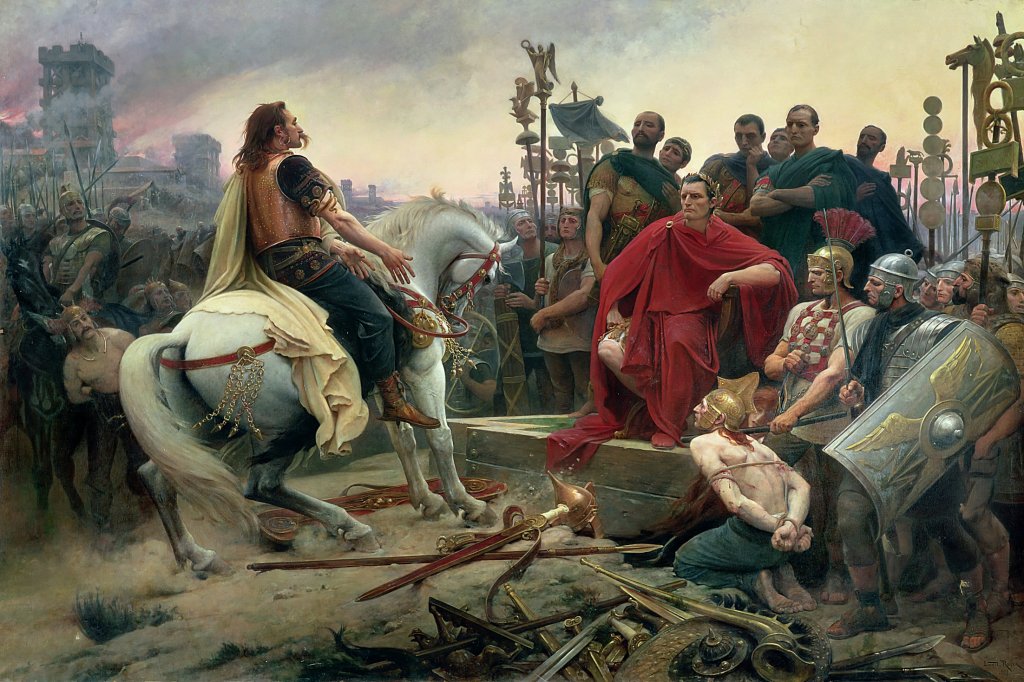
C: You are absolutely right! But I want you to take this analogy of sickness and zoom out. Forget the details of each individual and look at society as a whole. Over the last hundred or so years, our society has become sick. Rome has become greedy, our colonial expansion has made us arrogant and self-entitled. We have defeated everyone in the Mediterranean Basin, Carthage, Greece, Gaul, and Egypt. We have devoured everyone around us, so that there is nothing left to devour but ourselves. Caesar is not entirely to blame. He cannot succeed unless the society is sick enough to allow him. The event of Caesar only makes the diagnosis clearer. You see, everyone has become sick in some way, and this affects politics and how the society acts as a whole.
A: “I agree with your analogy, but I don’t see how philosophy serves a sick Rome. If Rome is sick, isn’t that more of a reason to return?”
C: “Trying to do anything in Rome would be futile. There are just too many problems. It would be like trying to cure chicken pox by applying cream to one pox.”
A: “Even so, wouldn’t it still be better to apply the cream than do nothing at all?”
C: “Yes, of course! but you forget that there is a third option. Applying cream will help soothe the symptoms but it will not cure the disease. What society needs is a remedy.”
A: “Well, the Stoics are the ones who come closest to a remedy. They say that if one applies rationality correctly, then they will be free of emotions. Does that mean that you hope to teach all of Rome philosophy and make them all Stoic wise men?
C: “Not quite. I do not want to teach people to become Stoics. The Stoic theory works on an individual level, but it is difficult, if not impossible, to apply politically at a societal level. The Stoics do not make room for the differences within humanity. Even if everyone wanted to be a Stoic, which they definitely don’t, not everyone would be capable. The truth is that most people would not be happy as Stoics. Their way can be harsh and is not for the faint hearted.”
A: “So you want to write a new philosophy which all of Rome can connect with?”
C: Not that either. I do not write philosophy for everyone. Not everyone likes philosophy. Nor do I write philosophy for philosophers either. Philosophers, like the Stoics, are concerned with themselves and not society. Indeed, most of them despise politics altogether. I write philosophy for the men of service. The men of noble character who wish to help others. I write philosophy for those who wish to be societal doctors.”
A: “And what does this philosophy look like?”
C: “I want my philosophy to offer a remedy for societal sickness. My philosophy’s focus is on the best thing that one can do for others. First, one must look inwards to themselves. One must be honest with what they see. None of us are Stoic Sages, and we all have a role to place in the societal sickness. One must face their emotions and learn how they work. One does not need to control and change them. They only need to be listened to. When one listens, they will realise that the emotions tell us what we believe deep down. Our thinking can become irrational and deceptive, but our emotions cannot lie. One must then use the emotion to identify false beliefs and let go of them. The Stoic theory can help us navigate this internal maze, but we must be careful not to lose sight of our goal. When one has taken responsibility for their inward state in this way, they must not get absorbed into their own world, nor expect perfection. A Stoic sage cannot cure the world alone, nor does his health mean anything without others to share it with. One’s energies must be focussed outside as well as inside. The remedies that my philosophy adds are ones that will help people share healing with those around them regardless of those people’s interest in philosophy. This type of healing can spread very quickly because health is contagious, more contagious than any disease. In this way, my philosophy will create doctors who can treat themselves, one another, and society as a whole. This type of philosophy, I believe, to be of far more service to Rome than any public action under a tyrant. Perhaps, when the tyrant is gone, I will return to my public life in Rome where hopefully I’ll be able to spread healing to even more people. For now, let us enjoy each other’s company in this wonderful country weather. Who knows when the next clouds will come.”…
We will have a look at what these remedies look like in next week’s discussion. There, we will focus on one emotion that I believe to be especially relevant to our own societal situation in the 21st century. That emotion is fear (metus). For those who are courageous enough, I’ll see you next week for the next step on the Via Ciceronis.


One response to “6. A Tusculan Repose”
[…] metus and completed our discussion on the Stoic theory of the Emotions. However, as we found out in Tusculum, Cicero’s intentions in writing philosophy were not theoretical, but practical. He was conscious […]
LikeLike