

Last week we set out on the next leg of our journey on the Via Ciceronis. On the previous leg, we discussed the Ciceronian model of the inward state. Now, we are turning our gaze from the inward to the outward. We began this with the source of all good action, the quality of leadership (virtus). In our discussion on virtus, we brought our social reality into the picture. The power dynamic inherent in all relationships was at the core. This is why we decided to use the term ‘quality of leadership’ as the English equivalent of virtus. You might remember from Spiderman (2002) that “with great power comes great responsibility!” Similarly, in Cicero’s philosophy, the power that should accompany those who possess the quality of leadership also came with a corresponding responsibility. Officium (pl. Officia) is the Latin word used by Cicero which can be understood as responsibility, and it is on this word that our discussion today will be focused.
An officium can be defined as ‘a helpful or beneficial act that one is bound to do in the way of service.’ i.e., one’s duty or obligation (to a person, the state, etc.). I am going to avoid using the translations ‘duty’ and ‘obligation’. Instead, as to emphasise the active social component, I am going to use ‘responsible action’ as the equivalent of officium. The word responsible comes from the Latin respondere meaning “to respond, answer to, promise in return”. In this way, we can understand a responsible action as the action which is promised in return for being in a free social community of whatever size, whether that be a two-person relationship, a family, a friend group, a business or wider society (we will talk more about freedom (libertas) in another essay). Indeed, citizens performing their responsible actions is a prerequisite for a healthy society.
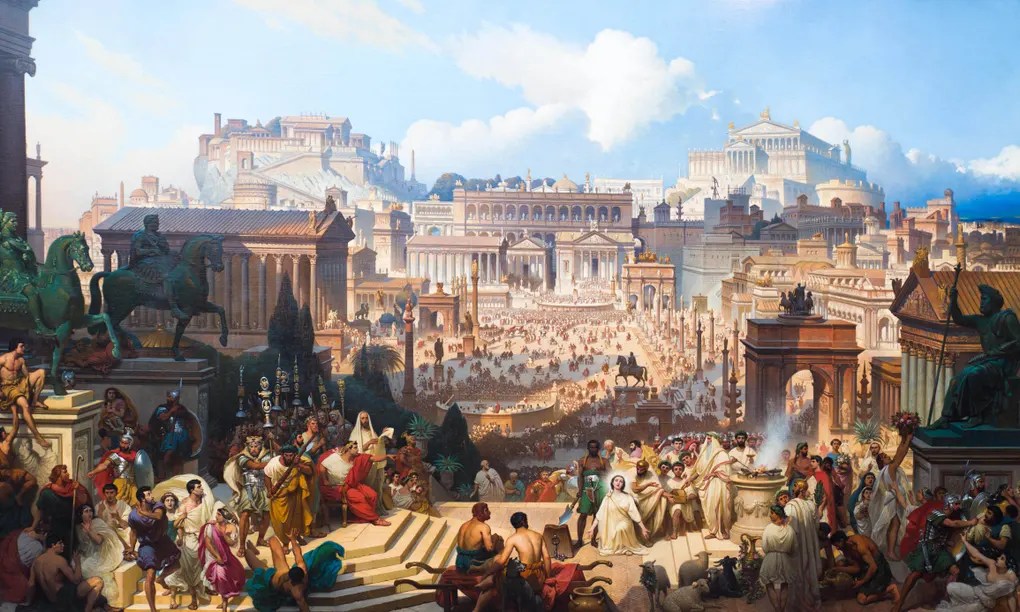
Cicero did not live in a healthy society. In his epoque, the Roman Elite had become corrupt and had abandoned their responsibility to care for and serve the people. When crises hit, it was the people who paid the price while the rich and powerful made huge profits. The laws and governmental structure were supposed to hold the abusers of power accountable (since they were the one’s responsible) like they had done for centuries. However, this structure had been abused and corroded into incompetence. This culminated with the rise of Julius Caesar, who robbed the Roman treasury to pay his army to kill other Romans in civil war. Lucan immortalizes the moment when he says:
“Pauperiorque fuit tunc primum Caesare Roma” (Luc. 3.168)
“And at that moment, for the first time, Rome was poorer than a Caesar”
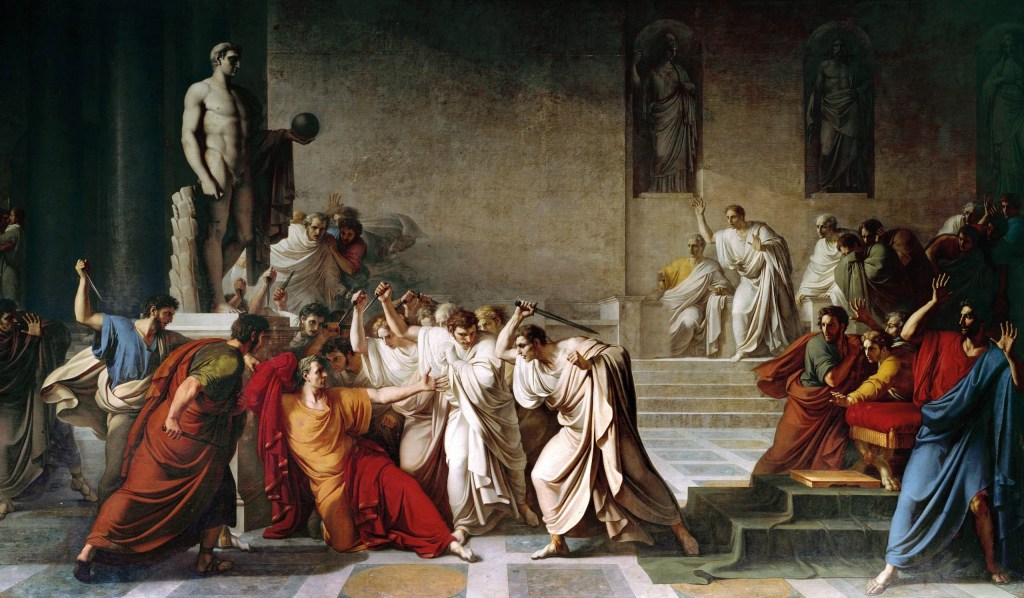
In 44BCE, Caesar was assassinated. The assassins thought that after killing Caesar the Republic would return to normal. They were wrong. The political structures had already been destroyed beyond repair. The Roman Republic had already collapsed. What was left was a power vacuum. It was during this interim that Cicero wrote the De Officiis (On Responsible Action). Without the Republican structure and laws to hold the abusers of power accountable, Cicero attempted to create a code of ethics for the creation of a healthy society. This code of ethics would set out which actions were responsible and should be encouraged as well as which actions were irresponsible and should be discouraged. If this code of ethics was widely accepted in society, then, like oil in water, the best leaders would rise to the top of society and allow society to be run in the best way.
In the first book of De Officiis (on responsible action), Cicero is concerned not only with which actions are good and which are bad, but also in ranking them. People, wanting to do the best thing, are often torn between two actions which are both good. Therefore, we can place actions on a spectrum from worse to best, from least responsible to most responsible. Honourable actions are those actions that require one to take more responsibility than necessary. In this way, it is not necessary for all people to be honourable and serve their communities, nor should they be criticized or blamed if they do not do so. At the same time, they should not be raised into position of power. A leader’s quality of leadership is recognised in the social arena through honourable actions. It is important that we understand a leader not necessarily as someone in a position of power, but as someone who accepts the responsibility of serving and acts honourably. The better one leads, the more will want to follow. Therefore, in a healthy free society the phrase from Spiderman is inverted. “With taking on great responsibility, comes great power.”
In conclusion, responsible actions are essential in the maintaining of a healthy free society. It is through these responsible actions that we can recognise the leaders in our communities. They will be the ones acting honourably, taking on more responsibility than was necessary. If we want the best outcomes for our society, we need raise up our leaders, those men and women who have taken on the responsibility of service. The more responsibility one takes on, the higher one should be raised in the social community. This is relevant to all levels of society, whether it be in the family, a friend group, a business, or wider society. What are these responsible actions which are deserving of praise? Next week, we will discuss the quality of leadership sapientia (wisdom) and the responsible actions that go with it.


One response to “10. Officium: Responsible Action and the Creation of a Healthy Society”
[…] our discussion last week on responsible action (officium), we are now ready to look at the first quality of leadership (virtus), sapientia. This is the core […]
LikeLike