


Last week we discussed metus and completed our discussion on the Stoic theory of the emotions. However, as we found out in Tusculum, Cicero’s intentions in writing philosophy were not theoretical, but practical. He was conscious of the fact that he was not the wise man who was free of emotions about whom the Stoics theorised. Nevertheless, that did not stop him from trying to do his best for mankind. He viewed himself as a doctor, finding remedies for the emotions in philosophy. Therefore, it is about time for us to discuss the Ciceronian remedies, an English word borrowed straight from the Latin remedium (pl. remedia).
What is a remedy? I’m sure we all understand a remedy as something that heals or something that returns one to a state of health. Although the etymology of the word confirms this meaning (see the full etymology here), I think it will be helpful for us to understand it in a different way. Medium can also mean ‘the middle’ or ‘the thing in the centre’. Therefore, in our particular context, let us understand a re-medium as ‘something that brings one back to the centre’. The centre is where tranquility and calmness are located in the inward state. The emotions move us away from this centre, in one direction with desire and gladness, and another with distress and fear. The remedia at which we will be looking are meant to centre the inward state and bring it back to a state of calm.
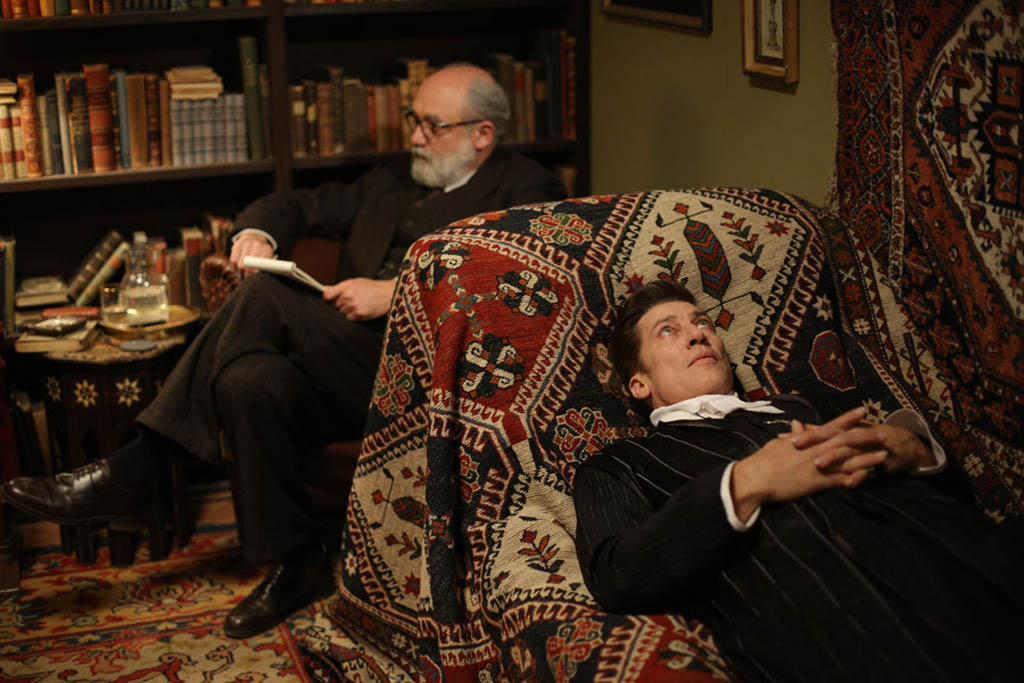
As an orator, Cicero believed that you could cure the emotions with language or speech (oratio). The first method is to use one’s speech to target the object of the emotion and convince one’s listeners that the object is neither good nor bad. This is a method that Cicero sees much benefit in. Indeed, if one is successful in this method then one will be able to eliminate all future emotions concerned with the same or similar object. However, this method is only useful if the listeners are already engaged in philosophy and willing to hear a rational argument. Most people are not susceptible to having their opinions about what is good or bad changed.
Cicero’s other method is to aim one’s speech at the emotions themselves, to teach that they are wrong and have nothing natural or necessary about them. Cicero finds this method the best because it can be used the most widely. If one uses this method, one does not need to enter an argument about whether each object should be considered good or bad. He believed that everyone should agree that it is a mistake when the inward state is moved away from right rationality and becomes irrational. Even if the object that inspires fear really is bad, becoming fearful and irrational would hinder our ability to act and avoid the bad thing, making the fear counterproductive. In this way, this method of aiming one’s speech at the emotion is compatible with all kinds of people, regardless of their valuation of good and bad and their engagement in philosophy.

To the orators who want to eliminate fear, Cicero gives more specific advice. He tells them that they should first avoid any actions that reflect fear, like being submissive and soft. He then says:
“The speaker should talk about fear (metus) itself, what an inconstant, weak, and feeble thing it is; nevertheless, it is also beneficial to speak contemptuously about the things which are feared.” (Tusc. 4.64)
In this way, both methods should be utilized. The speaker should focus his speech on fear itself. However, there is no harm in talking disapprovingly and mocking the things that we fear as well. In fact, Cicero spends the first two books of the Tusculan Disputations talking about death and pain, the two things that humans fear the most, believing that if one can overcome their fear of these two things, then they will be largely free of fear altogether.
These remedies are different to the Stoic ones. While the Stoics take a ‘holistic approach’ of treating the whole inward state with rationality (ratio), Cicero aims his oratory remedies at the individual symptoms, the false beliefs that cause the emotions. This is a significant difference and places human nature under a different light. Let’s imagine that everyone has an internal compass which guides one through life, directing us to pursue good and avoid bad. The Stoic method assumes that the emotions are evidence that the internal compass is broken and cannot accurately differentiate between good and bad anymore. Therefore, philosophy is used to analyse the workings of the inward state and it’s compass so that it can be fixed. Of course, this method will fix the problem. However, there is an easier way. Cicero does not see engagement with philosophy as necessary for everyone. This is because he sees the compass as perfectly functional. The problem is not the compass’s functionality. The problem is that the false beliefs act as magnets causing the compass to point in the wrong direction. This makes the compass appear as if it is broken. However, as soon as the magnet (the false belief) is removed the compass begins to work perfectly fine again. So often in our modern world, people with mental health issues feel like they cannot trust their own instincts because their emotions lead them astray again and again. They feel broken and in need of being fixed. This philosophy proves that wrong. We may be sick, but we are not broken. Our inward compasses are naturally able to guide us through life. It is when we try to rationalise our own ‘North’, drowning out the sound of our guide and unconsciously hiding our false beliefs, that our compasses point in the wrong direction. We already have everything we need within us; all we need to do is listen.

 Via Ciceronis